The story of Kendrick Johnson is one of tragedy, controversy, and a family’s unyielding quest for answers. It’s a case that has captured public attention for over a decade, blending elements of grief, suspicion, and conflicting evidence. Below, I’ll recount the full narrative based on documented events, investigations, and perspectives from both official sources and the Johnson family. I’ll draw from timelines, autopsies, legal proceedings, and analyses to present a comprehensive picture. At the end, I’ll share what I believe happened, grounded in the available facts.
The Discovery and Initial Shock
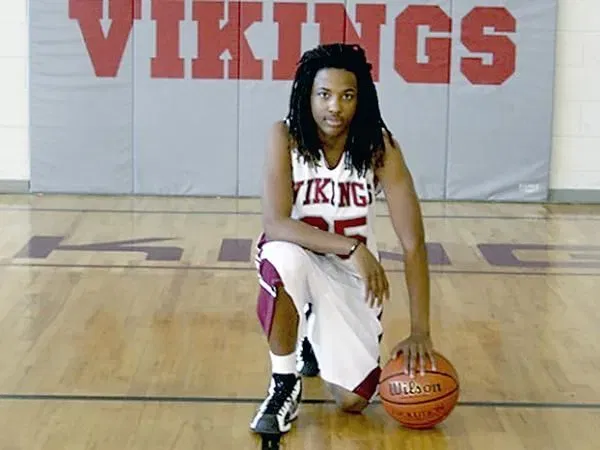
Kendrick Lamar Johnson, known as KJ to his friends and family, was a 17-year-old junior at Lowndes High School in Valdosta, Georgia. Born on October 10, 1995, he was an athletic teenager who played football and basketball, dreamed of college, and was described by those who knew him as outgoing, kind, and full of potential. On the afternoon of January 10, 2013, Kendrick was last seen alive during his fourth-period weight training class. Surveillance footage from the school’s old gymnasium captured him entering the gym alone around 1:09 p.m., heading toward a cluster of upright wrestling mats stored in the corner. These mats—large, cylindrical rolls about 6 feet tall and 3 feet wide—were commonly used by students to stash shoes and belongings to avoid paying locker fees, a makeshift storage solution in the school’s lax environment.
Kendrick didn’t show up for his next class, but no one raised an immediate alarm. It wasn’t until the following morning, January 11, that horror unfolded. Fellow students, including some athletes preparing for practice, spotted a pair of feet protruding from one of the rolled-up mats. They alerted a gym teacher, who helped unroll it. Inside, upside down and headfirst, was Kendrick’s body. He was wedged tightly, his arms above his head, with his gym shoes lodged beneath him. The scene was gruesome: blood had pooled around his face and upper body due to the inverted position. Paramedics pronounced him dead at the scene, estimating he’d been there for about 20 hours.
The Lowndes County Sheriff’s Office (LCSO) quickly launched an investigation. Initial findings pointed to a freak accident. According to investigators, Kendrick had likely reached into the mat to retrieve a shoe that had fallen inside, slipped headfirst, and become trapped. Unable to free himself due to the mat’s constriction and his inverted posture, he succumbed to positional asphyxia—a form of suffocation where the body’s position restricts breathing. The Georgia Bureau of Investigation (GBI) conducted the official autopsy on January 11, confirming this: no signs of foul play, no defensive wounds, and death attributed to accidental asphyxiation. The case was closed by May 2013 as a tragic mishap, with the sheriff at the time emphasizing it was “not a homicide.”
The Family’s Doubts and the Spark of Controversy
Kendrick’s parents, Kenneth and Jacquelyn Johnson, were devastated—and skeptical from the start. They couldn’t fathom how their healthy, 5’10”, 160-pound son could accidentally trap himself in a mat he could have easily tipped over or climbed out of. “Our son was murdered,” they insisted publicly in February 2013, pointing to what they saw as inconsistencies. Why was there no blood outside the mat if he’d struggled? Why did his face appear swollen and bruised in photos? And why hadn’t the school or authorities acted faster?
In March 2013, the Johnsons exhumed Kendrick’s body for a private autopsy by Dr. William R. Anderson, a forensic pathologist. His report starkly contradicted the official one: Kendrick had died from “non-accidental blunt force trauma” to the right side of his neck, near the jaw—a blow severe enough to cause unconsciousness or death. There were also signs of internal hemorrhaging. This fueled the family’s belief in murder, possibly involving a fight or assault covered up by influential figures. Rumors swirled: some pointed fingers at classmates, including the sons of a local FBI agent, over alleged bad blood from a school bus incident or romantic rivalry.
Adding to the mystery were the “missing organs.” When Dr. Anderson opened the body, he found Kendrick’s internal organs—brain, heart, lungs, liver—gone, replaced with crumpled newspaper. The family cried foul, alleging a cover-up to hide evidence of trauma or even organ harvesting. However, the funeral home (Harrington Funeral Home) explained this as a standard, if outdated, practice: after the GBI autopsy, organs are often not returned or are disposed of, and cavities are stuffed with materials like newspaper to preserve shape during embalming. (This method, common pre-1970s, isn’t illegal in Georgia.) The GBI confirmed all organs had been examined, with samples retained—no evidence of tampering.
Surveillance footage became another flashpoint. The school released videos in October 2013, showing Kendrick entering the gym alone. No one followed him immediately, and motion-activated cameras (sensitive only within 30 feet) captured no suspicious activity. But the footage had gaps—up to several minutes—and appeared grainy or looped in places, leading the family to claim editing or withholding. They argued it didn’t show the full story, perhaps missing an altercation. Independent reviews, however, found no tampering; the gaps were due to the cameras’ limitations, and timestamps aligned with witness accounts.
Escalating Investigations and Legal Battles
Public outcry grew, amplified by civil rights groups, protests, and media coverage. In July 2013, the U.S. Department of Justice (DOJ) opened a federal probe into possible civil rights violations, reviewing evidence for racial animus or a cover-up. By October, the Johnsons filed a $5 million wrongful death lawsuit against the Lowndes County school district, sheriff’s office, and others, alleging negligence and conspiracy.
The case was reopened briefly by the GBI in April 2014, but no new charges emerged. A second exhumation in June 2015 allowed another independent autopsy by renowned pathologist Dr. Michael Baden (known for cases like O.J. Simpson and Jeffrey Epstein). He echoed Dr. Anderson: blunt force trauma, not accident. This reignited calls for justice, with the family organizing rallies and launching the Kendrick Johnson Foundation in 2017 to advocate for similar cases.
In December 2016, more footage and witness statements surfaced, which the family said suggested scene tampering—items moved, blood not properly documented. A 2018 documentary, “Finding Kendrick Johnson,” detailed these claims, portraying a small-town cover-up involving law enforcement and school officials.
The DOJ closed its investigation in June 2016, finding “insufficient evidence” of federal crimes. “The government would have to prove beyond a reasonable doubt not only that someone killed Kendrick Johnson, but that the killing was motivated by racial animus,” they noted—a high bar unmet.
Undeterred, the Johnsons pressed on. In March 2021, amid national conversations on racial injustice post-George Floyd, Lowndes County Sheriff Ashley Paulk reopened the case, reviewing 17 boxes of DOJ evidence, including grand jury testimony and digital forensics. After 10 months, in January 2022, he closed it again: “Nothing criminal happened. It’s a weird accident.” He offered a $500,000 personal reward for proof of murder (unclaimed) and released a 16-page synopsis debunking rumors—no cover-up, no homicide.
Legal fights continued. In September 2023, the family filed a federal lawsuit against law enforcement for mishandling investigations and autopsies. By February 2025, a court denied motions to dismiss, allowing it to proceed. As of early 2026, the case remains in litigation, with the family vowing to fight for a coroner’s inquest or full transparency. They’ve raised over $100,000 through GoFundMe for legal fees and awareness, holding annual vigils in Valdosta.
The Lingering Questions and Broader Impact
Over the years, the case has spawned conspiracy theories: organ black market sales, FBI involvement, doctored videos. Supporters point to the independent autopsies and “missing” hours of footage as proof of foul play. Critics, including former NAACP leaders like Rev. Floyd Rose and Leigh Touchton (who initially advocated but later concluded accident after their own reviews), argue the evidence doesn’t hold up. Blood at the scene was purge fluid from decomposition, not violence; the neck bruise was minor and post-mortem; and student alibis checked out.
The story highlights systemic issues: distrust in law enforcement, especially in Black communities (Kendrick was Black, in a majority-white county); school safety lapses; and the pain of unresolved grief. It’s inspired documentaries, podcasts, and even a Starz series in 2021, keeping the debate alive.
What I Believe Happened
Based on the totality of evidence from multiple investigations—local, state, federal, and independent reviews—I believe Kendrick Johnson’s death was a tragic accident, not murder. The official autopsies and probes (GBI, DOJ, LCSO reopenings) consistently found no defensive wounds, no external blood spatter indicating a fight, and no credible witnesses to foul play. The video footage, while imperfect, shows him alone, and the mat’s design explains entrapment: once inverted, panic and constriction could lead to rapid asphyxia in minutes. The “missing organs” are explained by standard funeral practices, and the independent autopsies’ blunt force claims have been disputed as misinterpretations of decomposition effects (like skin slippage and lividity causing apparent bruising).
That said, I understand the family’s anguish—losing a child in such a bizarre way, with initial handling that felt rushed or insensitive, would make anyone question everything. There may have been negligence in school oversight (e.g., allowing unsafe mat storage), but no conspiracy or cover-up holds up under scrutiny. It’s a heartbreaking reminder that accidents can be as inexplicable as they are devastating, and closure isn’t always neat. If new evidence emerges, I’d reassess, but as it stands, this seems like a preventable tragedy, not a hidden crime.