One of the most intriguing aspects of the 1979 Ford Granada 2-door coupe is how Ford aggressively marketed it as a budget-friendly rival to high-end European luxury cars, particularly the Mercedes-Benz 280, despite its humble roots and lackluster performance—a classic tale of automotive ambition clashing with reality in the “malaise era” of American carmaking.
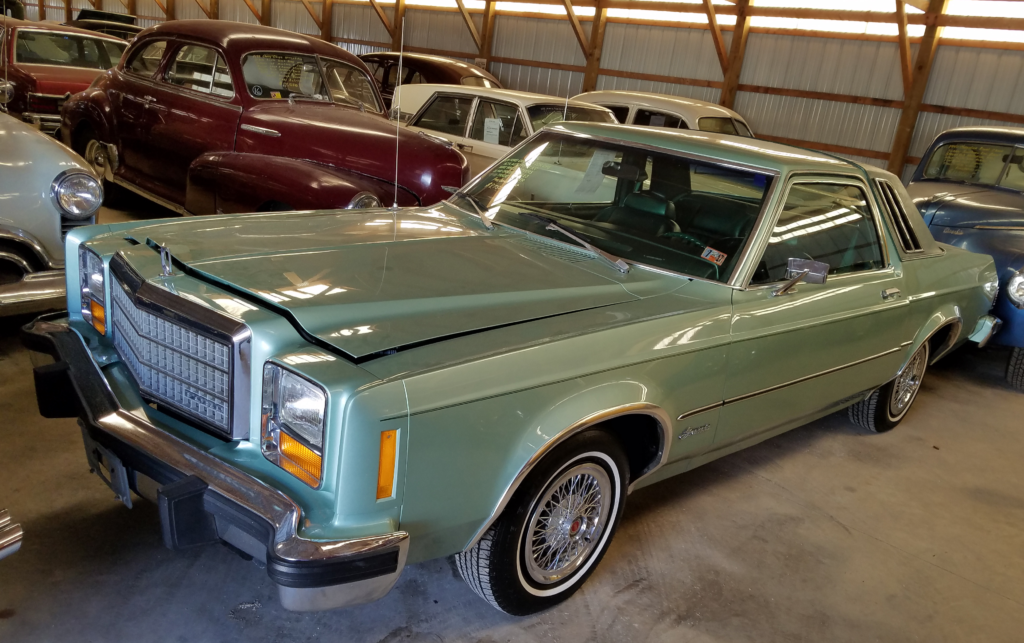
The story begins in the mid-1970s, amid the aftermath of the 1973 oil crisis, when U.S. consumers were shifting toward smaller, more fuel-efficient vehicles but still craved a touch of sophistication. Ford, eager to capitalize on this, repurposed the compact platform from its economical Maverick model—essentially stretching and restyling it into what they dubbed a “personal luxury” car. Introduced in 1975, the Granada came in sedan and coupe forms, with the 2-door coupe featuring distinctive touches like optional opera windows, half-vinyl roofs, and plush interiors to evoke elegance. By 1979, the model year saw minor refinements like updated trim options and engine tweaks, but it retained its core setup: a 109.9-inch wheelbase, front coil suspension with rear leaf springs, and power from a standard 4.1-liter inline-six engine producing around 90 horsepower (or an optional 5.0-liter V8 with about 130 hp), paired with a three-speed automatic or manual transmission.
The real drama unfolded in Ford’s marketing campaign, which boldly positioned the Granada as comparable to the prestigious Mercedes-Benz 280. Brochures highlighted how the Granada was just 2.2 inches longer than the Mercedes (197.7 inches vs. 195.5 inches) and boasted similar features like radial tires and power brakes, all for a base price of around $4,800—less than a quarter of the Mercedes’ $20,000+ tag. TV commercials even dared viewers to “spot the difference” between side-by-side shots of the two cars, implying the Granada offered Mercedes-level refinement on a blue-collar budget. This audacious pitch helped sell over 400,000 units in its debut year, but the illusion quickly faded. Owners soon discovered the Granada’s rough ride, mediocre handling, and anemic acceleration—stories abound of the inline-six struggling to maintain 65 mph on steep inclines, a symptom of stringent emissions regulations that choked engine output during the era. One anecdotal gem from enthusiasts recalls families unwrapping a new Granada as a holiday surprise, only to find it more “practical grandma-mobile” than luxury cruiser, with its boxy lines and vinyl accents aging into retro charm today.
In hindsight, the 1979 Granada 2-door coupe embodies the era’s contradictions: a car born from economic necessity, hyped with grandeur, and ultimately remembered for its unfulfilled promise, now a quirky collectible for those nostalgic for 1970s Americana.