On the evening of August 10, 2018, a quiet summer Friday at Seattle–Tacoma International Airport (Sea-Tac) was shattered by an event so improbable it seemed ripped from fiction. A 29-year-old ground service agent employed by Horizon Air, a regional carrier for Alaska Airlines, boarded an unattended Bombardier Q400 turboprop and took it into the sky without authorization. What followed was a brief, tragic flight that transfixed the Pacific Northwest and raised unsettling questions about airport security, mental health, and the unseen pressures carried by those who work behind the scenes of commercial aviation.
A Routine Night Turns Unthinkable
Richard Russell, known to friends and coworkers as “Beebo,” had worked for Horizon Air for more than three years. He was not a pilot. His job involved towing, parking, and servicing aircraft—roles that required proximity to planes but not access to flight controls for personal use. By all outward accounts, the evening began like any other shift.
At approximately 7:19 p.m. local time, Russell boarded a Horizon Air Q400 that had been parked on the north side of the airport. Using his access badge and his familiarity with airport operations, he entered the aircraft alone. There were no passengers onboard. Within minutes, the plane began to taxi, drawing the attention of air traffic controllers who quickly realized something was very wrong.
Unauthorized Takeoff
Without clearance, Russell maneuvered the turboprop onto a runway and took off from one of the busiest airports on the West Coast. The aircraft climbed into the evening sky over Puget Sound, immediately prompting the Federal Aviation Administration to halt departures at Sea-Tac. Incoming flights were diverted or delayed as authorities scrambled to assess the threat.
Two U.S. Air Force F-15 fighter jets were launched from Portland, Oregon, to intercept the stolen plane. Despite the dramatic response, officials later emphasized that the jets were not armed with the intention to shoot down the aircraft, but to monitor and guide it away from populated areas if possible.
A Conversation Heard by Millions
As the Q400 circled over the Sound, Russell communicated with air traffic controllers in a series of calm, almost casual radio exchanges. The audio, later released to the public, revealed a man who sounded reflective rather than panicked.
He spoke openly about his lack of flying experience, mentioning that he had “played some video games” and had watched pilots enough times to understand the basics. He joked at moments, apologized repeatedly for the disruption, and expressed awareness that his actions would have irreversible consequences.
Controllers, trained to manage emergencies, attempted to guide him toward a safe landing. They offered to help him align with a runway and encouraged him to try. Russell responded with humility and self-awareness, saying he did not believe he could land the aircraft successfully.
Final Maneuvers
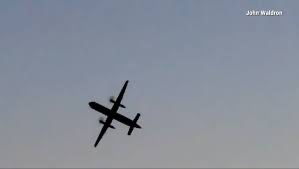
Radar and eyewitnesses tracked the Q400 performing daring aerial maneuvers—tight turns, rapid altitude changes, and at least one barrel roll. Aviation experts later noted that such maneuvers, while possible in a turboprop like the Q400, were extremely dangerous, especially for someone without formal flight training.
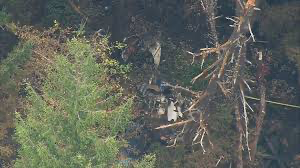
At approximately 8:09 p.m., after about 75 minutes in the air, the aircraft crashed on sparsely populated Ketron Island, southwest of Tacoma. The impact destroyed the plane and ignited a fire. Russell was killed instantly. There were no other casualties.
Immediate Aftermath
Emergency responders reached the crash site quickly, but there was nothing to be done. Sea-Tac Airport remained partially closed for several hours, with normal operations resuming later that night.
Authorities swiftly ruled out terrorism. Instead, they described the incident as an act of suicide by an individual experiencing personal distress. Russell’s family released a statement expressing heartbreak and emphasizing that he had been a loving son, friend, and brother.
Security and Mental Health Questions
In the weeks that followed, aviation experts and regulators examined how an employee without pilot credentials was able to start and fly a commercial aircraft. While no single security failure was identified, the incident highlighted vulnerabilities inherent in systems that rely on trust, access, and routine.
Equally significant was the conversation about mental health in aviation-adjacent professions. Russell had no known criminal history, and coworkers later described him as friendly and kind. The gap between outward normalcy and inner turmoil became a focal point of public discussion.
A Lasting Impact
The Horizon Air Q400 incident remains one of the most unusual aviation events in modern U.S. history. It was not an act driven by ideology or spectacle, but a deeply personal tragedy that unfolded in public view.
For those who listened to the radio transmissions or watched the aircraft’s path traced live on news broadcasts, the event left a lingering sense of unease—not because of what was destroyed, but because of how quietly and humanly it happened. A man went to work, carried an invisible burden, and made a choice that ended his life and briefly halted the rhythm of an entire region.
The skies over Puget Sound returned to normal that night, but the questions raised by the incident continue to echo long after the contrails faded.